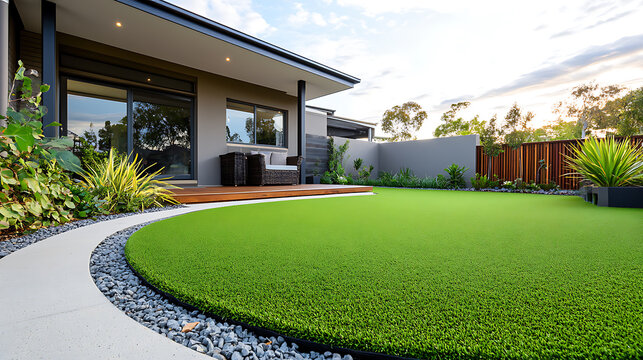
If you've tried everything to grow a healthy lawn in a heavily shaded area — different grass varieties, various fertilizers, careful watering schedules — and still end up with thin, patchy, or bare grass, you're dealing with one of the most common and frustrating lawn challenges. Artificial turf for shaded yards offers a practical, consistent solution where natural grass simply struggles to thrive.
Natural grass relies on adequate sunlight for photosynthesis, and even shade-tolerant grass varieties have minimum sunlight requirements to maintain healthy, dense growth. In heavily shaded areas — under large trees, alongside tall fences, or on the north side of homes — grass often thins out, becomes patchy, or fails to establish at all, regardless of how much care and attention it receives.
Under Mature Trees
Dense tree canopies block significant sunlight, and tree roots often compete with grass for water and nutrients, creating a particularly challenging environment for natural lawn growth.
Along Tall Fences or Structures
Areas that receive limited direct sunlight due to tall fencing, walls, or neighboring structures often struggle to support healthy grass, regardless of grass variety selection.
North-Facing Yard Sections
Depending on your property's orientation, certain areas may simply receive significantly less direct sunlight throughout the day, creating persistent shade challenges.
Side Yards Between Homes
Narrow side yards between closely spaced homes often receive minimal direct sunlight for much of the day, making these areas particularly prone to grass struggles.
Unlike natural grass, artificial turf doesn't rely on photosynthesis or sunlight to maintain its appearance. This means artificial turf performs identically whether installed in full sun or deep shade, providing the same consistent, green, manicured look regardless of light conditions — solving a problem that no amount of natural grass care can fully address.
No Competition With Tree Roots
Since artificial turf doesn't require soil nutrients or water the way natural grass does, it eliminates the root competition issue that often plagues natural grass planted near mature trees.
Consistent Appearance Regardless of Season
Shaded natural grass often shows more pronounced seasonal decline compared to sunnier areas of a lawn. Artificial turf maintains its consistent appearance year-round, regardless of the seasonal changes affecting surrounding natural grass.
No Ongoing Struggle With Reseeding
Rather than repeatedly reseeding a shaded area that continues to thin out, artificial turf provides a permanent solution that doesn't require this ongoing cycle of attempted repair.
Moisture and Drainage
Shaded areas can sometimes retain more moisture due to reduced evaporation from direct sunlight, making proper drainage planning during installation particularly important to prevent any water-related issues beneath the turf.
Debris Accumulation
Areas under trees may experience more leaf and debris buildup on the turf surface, making regular debris removal a slightly more frequent maintenance task compared to turf installed in more open areas.
Moss or Algae Considerations
In particularly damp, shaded conditions, proper drainage and occasional cleaning help prevent moss or algae growth on the turf surface over time.
Many homeowners choose a hybrid approach — using artificial turf specifically for problem shaded areas where grass has consistently struggled, while maintaining natural grass in sunnier areas of the property where it performs well. This targeted approach solves the specific shaded-area problem without requiring a complete property-wide turf conversion.
Artificial turf for shaded yards offers a genuine, permanent solution to one of the most persistent and frustrating lawn challenges homeowners face. Rather than continuing an endless cycle of reseeding and disappointment, artificial turf delivers a consistently green, attractive result regardless of how much shade the area receives.

Struggling with a shaded area where grass won't grow? Contact Breaking Ground Outdoor Services for a personalized artificial turf recommendation.