For any artificial turf installation covering an area larger than a single roll width, seaming becomes an essential and often underappreciated part of the installation process. Understanding why artificial turf seams matter so much helps you recognize quality installation work and ask informed questions of potential installers.
Artificial turf typically comes in rolls of a standard width, meaning any installation area wider than this standard roll requires joining multiple pieces together to achieve full coverage. How well this joining process, called seaming, is executed significantly affects both the visual appearance and long-term durability of your finished installation.
Nearly Invisible Appearance
A properly executed seam should be difficult to detect visually once the installation is complete, with turf fibers from adjacent pieces blending together seamlessly rather than showing an obvious line or gap.
Proper Fiber Direction Matching
Since artificial turf typically has a natural directional "grain" similar to carpet, ensuring adjacent pieces are oriented with matching fiber direction is essential for a seam that blends properly rather than showing an obvious visual break where direction changes.
Secure, Durable Bonding
Beyond just visual appearance, a quality seam needs to be structurally secure, resisting separation over time from foot traffic, weather exposure, and general use.
No Gaps or Overlaps
Properly executed seams should show neither visible gaps between pieces nor overlapping sections that create an uneven surface height at the transition point.
Seam Tape With Adhesive
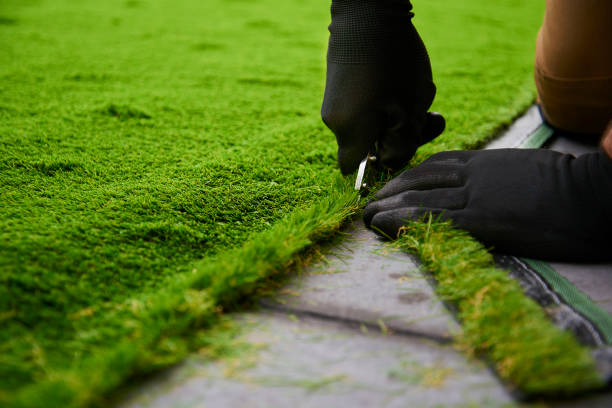
A common approach involves using specialized seaming tape combined with appropriate adhesive, placed beneath the turf at the seam location and bonded to the underside of both adjacent turf pieces.
Sewn Seams
For certain installations, a sewn seaming method joins adjacent turf pieces with actual stitching, offering a particularly durable connection method.
Proper Trimming for Fit
Before any bonding or joining technique is applied, precise trimming of turf edges ensures pieces fit together properly without gaps or overlaps at the seam location.
Minimizing Total Seam Length
Thoughtful planning of turf orientation and piece placement can help minimize the total length of seaming required for a given installation, reducing the overall area where seam quality becomes a factor in the finished appearance.
Avoiding High-Visibility Areas When Possible
While not always avoidable depending on installation size and shape, positioning seams away from the most visually prominent areas of an installation, when design allows, can help minimize their visual impact even if executed with high quality.
Considering Traffic Patterns
Seams positioned in lower-traffic areas may experience less stress over time compared to those positioned directly in high-traffic pathways, worth considering during installation planning where design flexibility allows.
Visible Gaps or Lines
An obvious visual break between adjacent turf sections, rather than a blended, seamless appearance, indicates seaming quality issues.
Mismatched Fiber Direction
If turf fibers clearly point in different directions across a seam, creating a visually obvious line where direction changes, this indicates improper installation planning.
Separation Over Time
Seams that begin separating or lifting after installation, particularly in high-traffic areas, indicate inadequate bonding during the original installation process.
Uneven Height at the Seam
Any noticeable difference in surface height between adjacent turf pieces at a seam location suggests improper trimming or fitting during installation.
Since seams represent one of the more technically challenging aspects of artificial turf installation, and issues here are often difficult to fully correct after the fact without redoing significant portions of the installation, this is genuinely one of the most important quality factors to evaluate when choosing an installer, even though it's easy to overlook if you're primarily focused on the turf product itself.
While artificial turf seams might not be the first thing you think about when planning your new lawn, proper seaming technique is genuinely one of the most important factors separating a seamless, professional-looking installation from one that shows obvious, distracting lines across the surface.

Planning an artificial turf installation and want to ensure quality seaming? Contact Breaking Ground Outdoor Services for an experienced, detail-oriented installation team.