Once you've decided a pergola is right for your backyard, one of the next big decisions is structure type: attached vs freestanding pergola. Each option offers distinct advantages depending on your home's layout, your outdoor living goals, and how you plan to use the space. This guide breaks down the differences to help you choose the right fit.
An attached pergola is connected directly to your home, typically extending from an exterior wall or roofline, creating a seamless transition between indoor and outdoor living space.
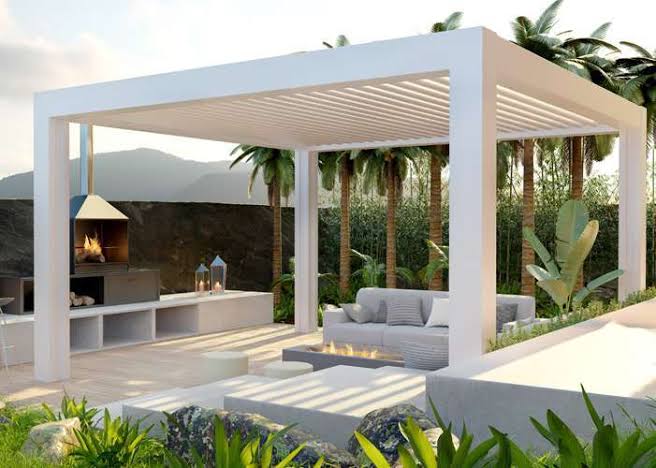
A freestanding pergola is built as an independent structure, positioned anywhere in the yard without a direct connection to the home itself.
Seamless Indoor-Outdoor Flow
An attached pergola creates a natural extension of your home, making it feel like a true continuation of your indoor living space rather than a separate feature in the yard.
Convenient Access
Being directly connected to the home means easy access for bringing out food, drinks, or supplies during entertaining, without crossing open yard space.
Structural Support
An attached pergola can sometimes utilize the home's existing structure for partial support, which may simplify certain aspects of the engineering and construction process.
Cohesive Design
An attached pergola can be designed to match the home's rooflines, materials, and architectural details, creating a unified overall look.
Design Flexibility
A freestanding pergola isn't tied to your home's existing structure or architecture, allowing complete flexibility in placement, size, and design style.
Placement Options
Freestanding pergolas can be positioned anywhere in the yard — near a pool, over a fire pit area, or as a standalone garden feature — rather than being limited to areas adjacent to the home.
Independent Structural Design
Since a freestanding pergola doesn't rely on the home's structure, it can be engineered purely around its own optimal design without needing to accommodate existing architectural constraints.
Defines a Distinct Outdoor Zone
A freestanding pergola creates a clearly defined destination within the yard, separate from the home, which can be particularly effective for larger properties with multiple outdoor living zones.
Choose an attached pergola if:
Choose a freestanding pergola if:
Attached pergolas can sometimes see modest cost savings by utilizing existing structural support, though this varies significantly by project specifics. Freestanding pergolas require complete independent structural support (footings and posts on all sides), which can affect overall project cost depending on size and design complexity.
For larger properties, some homeowners incorporate both an attached pergola directly off the home (often paired with an outdoor kitchen) and a freestanding pergola elsewhere in the yard (perhaps near a fire pit or garden feature), creating multiple distinct outdoor living zones.
The attached vs freestanding pergola decision ultimately comes down to your home's layout, your ideal outdoor living zones, and your design priorities. Both options can deliver a beautiful, functional shade structure — the right choice depends on how you want that structure to relate to your home and yard.

Still deciding between an attached or freestanding pergola? Contact Breaking Ground Outdoor Services for expert guidance on the best fit for your property.