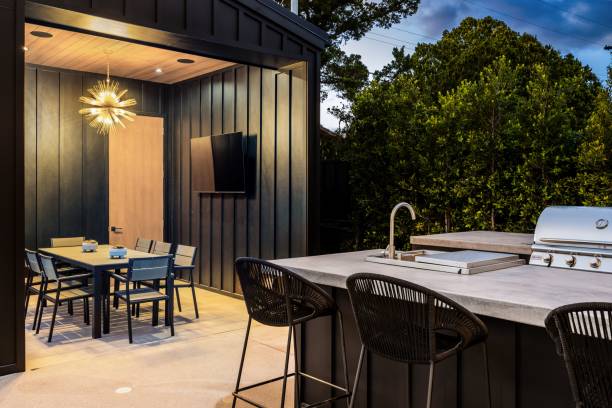
When planning an outdoor kitchen, one of the foundational decisions homeowners face is choosing between a built-in vs modular outdoor kitchen approach. Each offers distinct advantages depending on your budget, timeline, and long-term plans for the space. This guide breaks down the key differences to help you decide which approach fits your needs.
A built-in outdoor kitchen is constructed on-site as a permanent structure, typically using masonry, stone veneer, or stucco to create a custom-built cabinet and counter system around your chosen appliances.
A modular outdoor kitchen uses pre-manufactured cabinet units, often made from stainless steel or weather-resistant polymer materials, that are assembled on-site rather than built from scratch, offering a faster installation process.
Fully Custom Design
Built-in kitchens offer complete design flexibility, allowing every dimension, material choice, and layout detail to be tailored specifically to your space and preferences.
Seamless Integration With Your Landscape
Since built-in kitchens are constructed on-site, they can be designed to integrate seamlessly with surrounding hardscape, matching materials used in nearby patios, retaining walls, or other features.
Perceived Permanence and Value
A well-built, custom masonry outdoor kitchen often carries a strong sense of permanence and can be viewed as a more substantial property investment compared to a modular system.
Considerations
Built-in kitchens typically involve a longer construction timeline and higher overall cost compared to modular options, given the custom, on-site construction process involved.
Faster Installation
Since modular components are pre-manufactured, installation is typically significantly faster than the on-site construction process a built-in kitchen requires.
Lower Overall Cost
Modular systems often represent a more budget-friendly option compared to fully custom built-in construction, given the efficiency of factory-manufactured components.
Flexibility for Future Changes
Modular units can sometimes be reconfigured, added to, or even relocated more easily than a permanent built-in structure, offering some flexibility if your needs or space change over time.
Considerations
Modular kitchens may offer less design customization compared to a fully built-in approach, and the aesthetic can feel less integrated with surrounding hardscape unless thoughtfully incorporated into the overall design.
Built-in kitchens, when properly constructed with quality materials, offer excellent long-term durability, often comparable to other permanent masonry structures on your property.
Modular kitchens, particularly those made from marine-grade stainless steel or other weather-resistant materials, also offer strong durability, though the specific materials and construction quality vary across different modular product lines.
Built-in kitchens generally offer the strongest opportunity for cohesive design integration with surrounding patio, retaining wall, or other hardscape materials, since they're constructed specifically for your space.
Modular kitchens can still be thoughtfully incorporated into an overall design, particularly when paired with complementary surrounding hardscape and landscaping, though achieving the same level of custom integration typically requires more deliberate planning.
Choose a built-in outdoor kitchen if:
Choose a modular outdoor kitchen if:
The built-in vs modular outdoor kitchen decision ultimately comes down to your priorities around customization, budget, and timeline. Both approaches can deliver a genuinely functional, enjoyable outdoor cooking space — the right choice depends on which factors matter most for your specific project.

Not sure whether a built-in or modular outdoor kitchen is right for you? Contact Breaking Ground Outdoor Services for expert guidance on the best approach for your space and budget.