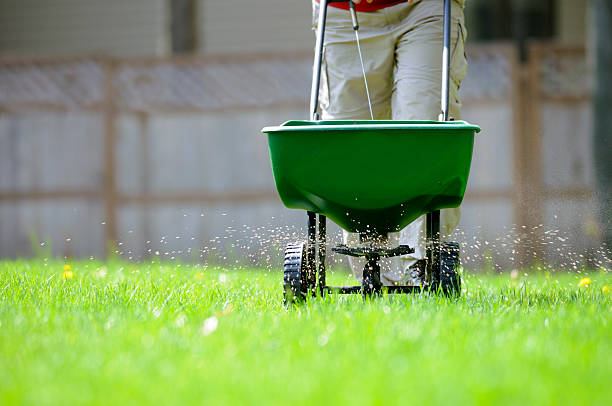
Proper fertilization plays a meaningful role in helping new sod establish strong roots and maintain long-term health, but timing and approach matter significantly. Applying fertilizer too early, too late, or with the wrong formulation can do more harm than good during this critical establishment period. This guide covers a practical timeline for fertilizing new sod.
Unlike an established lawn that can handle a fairly standard fertilization schedule, new sod is in a particularly sensitive establishment phase where roots are actively working to connect with the soil beneath. Fertilizing at the wrong time or with an inappropriate product can stress this delicate process rather than support it.
Applying to Prepared Soil
Many sod installations benefit from a starter fertilizer application to the prepared soil before sod is actually laid, providing essential nutrients positioned right where new roots will be developing.
Why Starter Formulations Differ
Starter fertilizers are typically formulated with a nutrient ratio specifically designed to support root development, differing from standard lawn fertilizers designed for established grass maintenance.
Holding Off on Additional Fertilizer
During the initial one to two weeks immediately following sod installation, the primary focus should be on consistent, appropriate watering rather than additional fertilization. New sod's priority during this window is root establishment, and consistent moisture is the most critical factor supporting that process.
Avoiding Premature Fertilization
Applying additional fertilizer too early, before roots have begun establishing a connection with the soil, doesn't provide meaningful benefit and can potentially stress the still-vulnerable new sod.
Confirming Establishment First
Once your new sod has begun showing signs of establishment — resisting a gentle tug test, showing consistent color and some new growth — this is typically an appropriate window to consider a light fertilization application.
Choosing an Appropriate Formulation
At this stage, a balanced, appropriate fertilizer formulation suited to your specific grass variety helps support continued healthy establishment without overwhelming still-developing root systems.
Following Product-Specific Guidance
Since specific fertilizer products and grass varieties can have different recommended timing and application rates, following the guidance for your particular situation helps ensure appropriate application.
Establishing a Regular Routine
Once your new sod has fully established, typically several weeks to a couple of months after installation depending on conditions and grass variety, you can transition to a standard, ongoing fertilization schedule appropriate for your specific grass type and regional climate.
Seasonal Fertilization Considerations
For most Texas warm-season grass varieties, fertilization schedules typically align with the active growing season, with applications generally reduced or paused during winter dormancy.
Pale or Yellowing Color Despite Proper Watering
If watering has been consistent and appropriate but the lawn still shows pale or yellowing color, this may indicate a nutrient deficiency worth addressing through appropriate fertilization.
Slow or Stalled Growth
If establishment seems slower than expected despite proper watering and otherwise appropriate care, insufficient nutrients could be a contributing factor worth evaluating.
Fertilizing Too Soon
Applying additional fertilizer before sod has begun establishing can stress the grass rather than support it, since the priority during this early window should be root development supported by proper watering.
Using the Wrong Formulation
A fertilizer product not well-suited to your specific grass variety or the establishment stage can be less effective, or in some cases counterproductive, compared to an appropriately chosen product.
Over-Fertilizing
Applying more fertilizer than recommended, or applying too frequently, can stress new sod and potentially contribute to issues rather than supporting healthy growth.
Ignoring Soil Test Results
If a soil test reveals specific nutrient deficiencies or imbalances, tailoring your fertilization approach to address these specific findings typically produces better results than a generic, one-size-fits-all fertilization schedule.
A thoughtful, properly timed approach to fertilizing new sod supports strong initial root establishment and sets the foundation for a healthy, resilient lawn for years to come, avoiding the common mistake of either neglecting nutrition entirely or overwhelming new grass with premature or excessive fertilization.

Just installed new sod and have questions about fertilization or ongoing care? Contact Breaking Ground Outdoor Services for guidance and support.