If you've got a sloped yard, drainage issues, or a section of your property that just won't stay put, you've probably already searched "retaining wall cost" more than once. It's one of the most common questions Tyler, TX homeowners ask before starting a landscape project, and for good reason — retaining walls are a serious investment that affects both the function and the curb appeal of your property.
In this guide, we'll break down what actually drives retaining wall cost, the materials available, and what to expect from the process so you can budget with confidence.
There's no single number that applies to every yard, because retaining wall cost depends on several site-specific factors:
Wall Height and Length
The bigger the wall, the more material, labor, and engineering it requires. A small 2-foot decorative wall costs significantly less than a 4-foot structural wall holding back a major slope.
Material Choice
Retaining wall cost varies a lot depending on material:
Soil Conditions and Drainage
Texas clay soil expands and contracts with moisture, which means proper drainage systems (gravel backfill, perforated pipe, weep holes) are essential. Skipping this step is the number one reason retaining walls fail — and it also affects the total cost, since proper drainage adds material and labor.
Site Accessibility
If equipment can easily reach the work area, labor costs stay lower. Tight backyards or hard-to-reach slopes can increase retaining wall cost due to additional site prep or hand labor.
Engineering Requirements
Taller retaining walls (typically over 4 feet) often require engineered drawings and permits, which adds to the overall project cost but is critical for long-term stability and safety.
Retaining walls aren't just functional — they're one of the few landscape features that solve a real structural problem while also adding value to your property. A well-built retaining wall can:
In Tyler and the surrounding DFW area, where soil movement is common, a properly engineered retaining wall isn't a luxury — it's often a necessity for protecting your home's foundation and outdoor living spaces long-term.
Not sure if your yard actually needs one? Here are common signs homeowners notice before searching for retaining wall cost:
If any of these sound familiar, it's worth getting a professional assessment before the problem gets more expensive to fix.
Segmental Block
Most popular option for residential retaining walls. Interlocking blocks are durable, require no mortar, and come in a variety of colors and textures to match your home's exterior.
Natural Stone
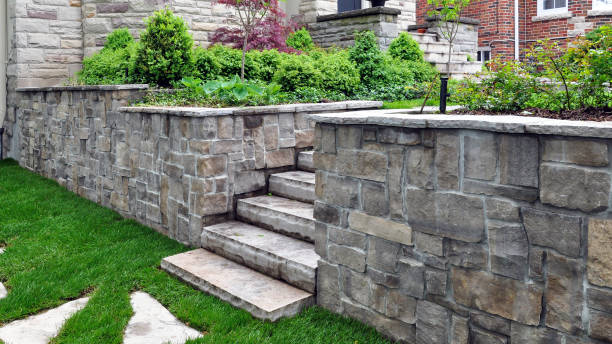
Offers a high-end, custom look. Retaining wall cost is higher with natural stone due to material and labor-intensive installation, but the visual payoff is significant for front-yard or feature walls.
Poured Concrete
Extremely strong and ideal for taller structural walls. Often used when engineering requirements call for maximum load-bearing strength.
A typical retaining wall project moves through a few clear stages: an initial consultation to understand your goals and budget, an on-site assessment to evaluate slope, soil, and drainage needs, a design and estimate phase where you get a clear scope of work, and finally the build itself, where the wall is constructed with proper base prep, drainage, and finishing.
Understanding this process upfront helps homeowners know what to expect and avoid surprises once construction begins.
Retaining wall cost varies too much from yard to yard for a generic online estimate to be reliable. The best way to get an accurate number is a site visit where soil, slope, and drainage needs can be properly evaluated.

Ready to solve your sloped yard or erosion issue for good? Contact Breaking Ground Outdoor Services to get a personalized retaining wall estimate for your Tyler, TX property.