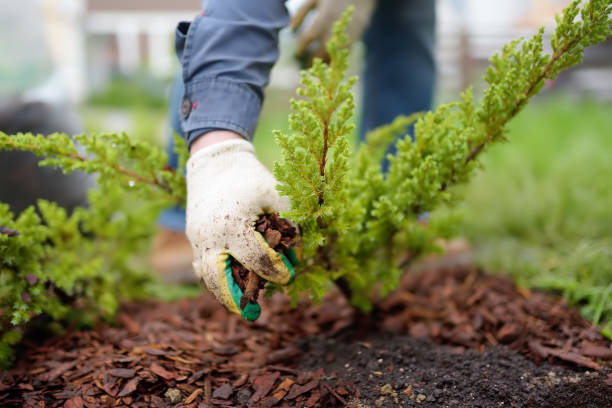
Mulch might seem like a minor finishing touch, but choosing the right type plays a real role in plant health, water retention, and the overall appearance of your finished landscape installation. This guide covers the most common mulch options and how to choose the right one for your specific needs.
Beyond simply finishing the look of planting beds, mulch serves several important functional purposes: retaining soil moisture, regulating soil temperature, suppressing weed growth, and gradually improving soil quality as organic mulch breaks down over time. Choosing the right mulch type supports these functions while also complementing your landscape's overall aesthetic.
Hardwood Mulch
A popular, widely available option that breaks down over time, contributing organic matter back into the soil. Hardwood mulch offers a natural brown color and moderate longevity before needing replenishment.
Pine Bark Mulch
Offers a slightly different texture and reddish-brown color compared to hardwood mulch, and tends to break down a bit more slowly, meaning slightly less frequent replenishment.
Pine Straw
A lighter-weight option popular in some regions, offering a distinctive texture and typically requiring more frequent replenishment than bark-based mulches, but blending naturally into more woodland-style landscape designs.
Cedar Mulch
Known for a pleasant natural scent and some natural insect-repelling properties, cedar mulch offers an attractive reddish-brown color and reasonable longevity.
Compost
While not always used as a topical mulch on its own, compost can be incorporated as a soil amendment or combined with other mulch types to boost the nutrient content available to plants.
Rock or Gravel Mulch
Doesn't break down over time, making it a long-lasting, low-maintenance option, particularly popular in xeriscape or drought-tolerant landscape designs. However, it doesn't contribute organic matter to the soil the way organic mulches do.
Rubber Mulch
Made from recycled rubber materials, offering long-lasting durability and consistent appearance, though it doesn't break down to improve soil quality and some homeowners prefer to avoid it in areas with edible gardens.
Mulch is available in a range of natural and dyed colors, from traditional browns to reddish tones to darker, near-black options. Choosing a mulch color that complements your home's exterior and overall landscape design creates a more cohesive, intentional final appearance.
Proper mulch depth typically ranges from two to four inches in planting beds — enough to provide meaningful moisture retention and weed suppression benefits without smothering plant roots or creating excessive moisture retention against plant stems and tree trunks.
Keep Mulch Away From Trunks and Stems
Piling mulch directly against a tree trunk or plant stem (sometimes called a "mulch volcano") can cause moisture-related rot issues. Mulch should be pulled back slightly from direct contact with woody plant material.
Apply Evenly
Consistent mulch depth across planting beds creates a more polished, professional appearance compared to uneven application.
Consider Weed Barrier Fabric Underneath (With Caution)
While weed barrier fabric can provide some additional weed suppression, it can also interfere with organic mulch's ability to improve soil over time and may complicate future planting adjustments. This tradeoff is worth discussing based on your specific landscape goals.
Organic mulches gradually break down and contribute beneficial organic matter to the soil, supporting long-term soil health and plant vigor. Inorganic options like rock or rubber mulch offer longevity and reduced replenishment needs but don't provide this same soil-building benefit over time.
Choosing the right mulch during your landscape installation might seem like a minor finishing detail, but it plays a real, ongoing role in plant health, moisture retention, and the overall polished appearance of your finished landscape.

Planning a landscape installation and want expert guidance on mulch and finishing details? Contact Breaking Ground Outdoor Services to discuss your project.