A lawn that's mostly healthy but has a few frustrating bare or patchy spots doesn't necessarily require a complete overhaul. In many cases, targeted sod patching offers a fast, effective way to restore a uniform, healthy appearance without the time and uncertainty of reseeding those problem areas. This guide covers how to fix bare spots in your lawn using sod.
Before patching, it helps to understand what caused the problem in the first place, since addressing the underlying cause is just as important as the patch itself:
For isolated bare spots, sod patching offers several advantages over reseeding: near-instant visual results rather than waiting weeks for seed germination, more predictable establishment since sod arrives with an already-developed root system, and better resistance to washing away compared to loose seed, particularly in areas prone to water runoff.
Before installing a sod patch, address whatever caused the original bare spot. If drainage is the issue, correct the grading or add drainage improvements first. If shade is the problem, consider whether the area needs a different grass variety altogether, or whether a non-grass ground cover solution might be more appropriate long-term.
Clear away dead grass, weeds, and debris from the affected area, creating a clean edge between the existing healthy lawn and the section to be patched.
Loosen the soil in the bare area, removing any compacted sections and incorporating topsoil or compost if the existing soil quality appears poor. This step is essential for helping new sod establish strong roots in the patched area.
For the most seamless result, use the same grass variety as your existing lawn when patching. Mixing different grass types can create a visually inconsistent lawn, with different colors, textures, or growth patterns standing out in the patched area.
Trim the new sod pieces to fit the specific shape and size of the bare area, fitting them snugly against the surrounding existing grass to minimize visible seams.
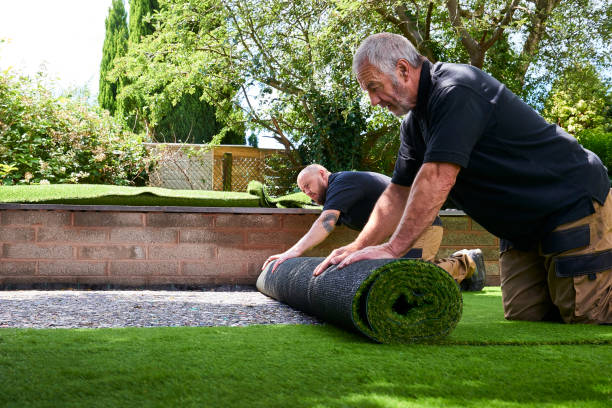
Lay the sod patch into place, pressing firmly to ensure good contact between the new sod's root system and the prepared soil beneath.
Just like a full sod installation, patched areas require consistent, frequent watering during the initial establishment period to help roots connect properly with the surrounding soil.
Keep foot traffic off the patched area as much as possible during the first couple of weeks, allowing the new sod time to establish before facing regular use.
If bare or patchy areas are widespread across a significant portion of your lawn, or if there's an underlying issue (like poor overall drainage or soil quality) affecting multiple areas, a more comprehensive sod installation may deliver better long-term results than patching numerous individual spots.
Sod patching offers a practical, efficient solution for homeowners dealing with isolated bare or patchy lawn areas, delivering quicker, more predictable results than reseeding alone. With proper diagnosis of the underlying cause and careful installation technique, patched areas can blend seamlessly into your existing lawn for a uniformly healthy, attractive appearance.

Dealing with bare or patchy spots in your lawn? Contact Breaking Ground Outdoor Services to restore a healthy, uniform lawn with professional sod patching.