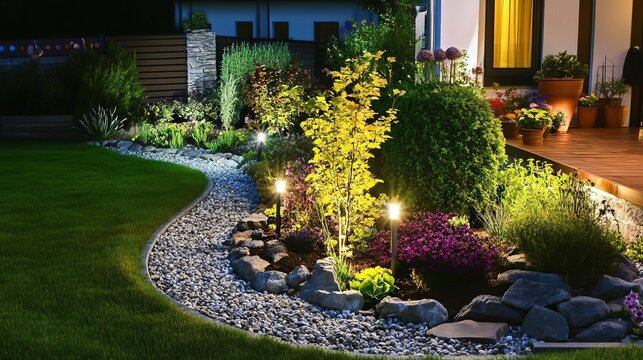
A beautiful landscape design deserves to be enjoyed both day and night, and thoughtful landscape lighting design extends your outdoor space's usability and visual appeal well past sunset. Beyond aesthetics, proper lighting also improves safety and navigation around your property after dark. This guide covers key principles and techniques for effective landscape lighting design.
Without proper lighting, even a beautifully designed landscape becomes largely invisible once the sun sets, and pathways, steps, or grade changes can become safety hazards in the dark. A well-planned landscape lighting design solves both problems while adding genuine visual drama and ambiance to your property in the evening.
Uplighting
Positioning lights at the base of trees, architectural features, or specimen plants and directing light upward creates dramatic shadows and highlights, drawing attention to key focal points in your landscape.
Downlighting
Mounting lights higher (often in trees) and directing light downward creates a soft, natural, moonlight-like effect across a broader area, useful for illuminating patios or larger planting areas.
Path Lighting
Low-level fixtures placed along walkways provide both safety (clear visibility of the path) and a welcoming, guided aesthetic leading visitors through your landscape.
Silhouetting
Placing a light behind a plant or feature and directing it toward a wall or fence creates a striking silhouette effect, adding depth and visual interest to the landscape.
Grazing
Positioning light close to a textured surface (like a stone retaining wall) and directing it across the surface highlights texture and dimension that would otherwise go unnoticed in the dark.
Accent Lighting
Focused lighting on specific features — a specimen tree, a piece of garden art, an architectural detail — creates intentional focal points within the overall landscape lighting design.
Walkways and Steps
Safety-focused lighting along paths and any elevation changes helps prevent trips and falls while guiding movement through the landscape after dark.
Patio and Entertaining Areas
Adequate ambient lighting supports evening use of outdoor living spaces, whether for dining, relaxing, or entertaining guests.
Architectural Features
Highlighting retaining walls, pergola structures, or other hardscape elements adds visual depth and draws attention to key design investments in your landscape.
Specimen Trees and Plants
Uplighting a particularly attractive tree or garden feature creates a dramatic focal point that extends its visual impact into the evening.
Water Features
If your landscape includes a water feature, lighting designed to highlight movement and reflection adds a particularly captivating visual element after dark.
Layering Different Light Types
The most effective landscape lighting designs typically combine multiple techniques — path lighting for safety, accent lighting for focal points, and ambient lighting for overall atmosphere — rather than relying on a single approach throughout the property.
Choosing the Right Fixture Style
Fixtures should complement your overall landscape and architectural style, whether that's sleek and modern or more traditional and ornamental.
Smart Controls
Many modern landscape lighting systems incorporate smart controls, allowing scheduling, dimming, or remote adjustment, adding convenience and flexibility to how the lighting is used.
Energy Efficiency
LED lighting has become the standard for landscape applications, offering long fixture life and lower energy consumption compared to older lighting technologies.
Over-Lighting
Using too many fixtures or overly bright lighting can create a harsh, unnatural appearance rather than the soft, dramatic effect most homeowners are seeking.
Inconsistent Color Temperature
Mixing very different light colors (very warm and very cool tones) across the same landscape can create a disjointed, uncohesive appearance rather than a unified design.
Neglecting Safety-Critical Areas
Prioritizing purely decorative lighting while neglecting pathways or steps can leave important safety areas inadequately illuminated.
Ignoring Seasonal Plant Growth
Fixtures positioned without accounting for how surrounding plants will grow can end up obscured or create unintended shadows as the landscape matures.
A thoughtful landscape lighting design transforms your property from a space that's only enjoyed during daylight hours into one that offers beauty, safety, and functionality around the clock. With the right combination of techniques and fixtures, your landscape can become just as impressive after dark as it is in the daytime.

Ready to illuminate your landscape with a custom lighting design? Contact Breaking Ground Outdoor Services to start your consultation.