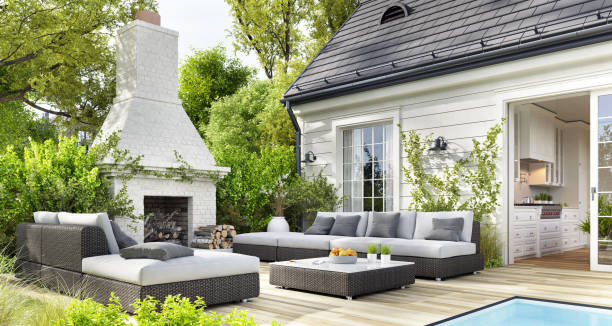
While the firebox and seating area often get the most attention during outdoor fireplace planning, the chimney plays an equally important role — both functionally, in properly venting smoke, and aesthetically, as one of the most visually prominent elements of the entire structure. Understanding outdoor fireplace chimney design helps ensure your fire feature performs well and looks intentional.
For wood-burning outdoor fireplaces specifically, the chimney is essential for properly venting smoke away from seating areas and nearby structures. Beyond pure function, the chimney's height, width, and style significantly influence the fireplace's overall visual proportion and architectural character.
Proper Height for Ventilation
A chimney needs adequate height to create sufficient draft, effectively pulling smoke upward and away from the seating area rather than allowing it to linger at a level where it becomes bothersome for anyone nearby.
Appropriate Flue Sizing
The internal flue, which channels smoke through the chimney, needs to be appropriately sized relative to the firebox opening to ensure efficient, effective ventilation.
Spark Arrestors
Many chimney designs incorporate a spark arrestor at the top, a mesh screen that helps prevent embers from escaping the chimney and creating a fire hazard, particularly important consideration for safety.
Wind and Downdraft Considerations
Chimney design sometimes needs to account for specific site conditions, like consistent wind patterns, that could otherwise cause downdraft issues affecting how smoke behaves.
Proportion Relative to the Overall Structure
A chimney's height and width should feel proportionate to the fireplace's overall size and the surrounding patio space, avoiding either an undersized chimney that looks disconnected from a substantial firebox, or an oversized chimney that overwhelms a more modest structure.
Matching Materials to the Rest of the Fireplace
Using consistent materials — matching stone, brick, or stucco finish — between the chimney and the main firebox structure creates a cohesive, intentional overall appearance.
Cap or Crown Details
The very top of the chimney, sometimes called the crown or cap, offers an opportunity for a distinctive finishing detail, whether a simple, clean design or a more decorative element that adds architectural interest.
Chimney Shape and Style
Chimney designs can range from simple, straight rectangular forms to more tapered or stepped designs, each contributing a different overall aesthetic character to the fireplace structure.
Modern Fireplace Designs
Clean, simple chimney forms with minimal ornamentation typically complement modern outdoor fireplace designs, often using smooth stucco or sleek stone finishes.
Traditional Fireplace Designs
More substantial, sometimes tapered chimney designs with classic materials like brick or natural stone often suit traditional fireplace styles, echoing classic architectural proportions.
Rustic Fireplace Designs
Rougher stone textures and less uniform chimney shapes can complement a more rustic, natural fireplace design aesthetic.
While gas fireplaces don't always require the same type of traditional chimney a wood-burning design does, many still incorporate a chimney-like structure for aesthetic consistency, even when the actual ventilation mechanism differs from a true wood-burning flue system. Understanding this distinction helps clarify design options if you're planning a gas fireplace specifically.
Some jurisdictions have specific height or clearance requirements for outdoor fireplace chimneys, particularly regarding distance from combustible structures or property lines, making it worth confirming local requirements during the design phase.
Underestimating Necessary Height for Proper Ventilation
A chimney that's too short for effective draft can result in smoke lingering in seating areas rather than venting properly away from the space.
Mismatched Proportions
A chimney that's disproportionately large or small relative to the overall fireplace structure can make the finished feature look unbalanced or unintentional.
Inconsistent Materials
Using different materials or finishes between the chimney and main firebox structure, without a clear design intention, can create a disjointed rather than cohesive overall appearance.
Thoughtful outdoor fireplace chimney design ensures both proper function — effective smoke ventilation — and a visually cohesive, well-proportioned overall structure. It's a detail that deserves the same careful planning as the firebox and surrounding seating area.

Ready to plan an outdoor fireplace with properly designed chimney function and style? Contact Breaking Ground Outdoor Services to start your custom design consultation.