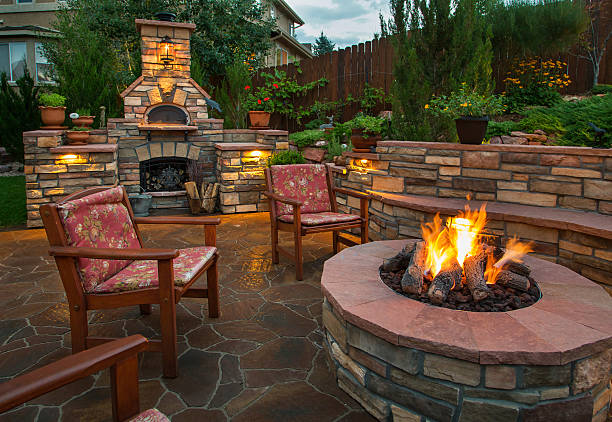
An outdoor fireplace adds warmth, ambiance, and value to a backyard, but because it involves an open flame and, in some cases, gas connections, understanding outdoor fireplace codes and safety requirements is an important part of the planning process. This guide covers the key considerations homeowners should be aware of before building.
Outdoor fireplace codes exist to protect homeowners and their properties from fire hazards, structural failures, and ventilation issues. Working with an experienced contractor familiar with local requirements helps ensure your fireplace is not only beautiful but also safe and properly permitted.
Distance From Structures
Most jurisdictions require a minimum clearance between an outdoor fireplace and combustible structures, such as your home, fencing, or overhanging trees. This clearance helps prevent fire from spreading to nearby structures.
Distance From Property Lines
Depending on your local codes, there may be minimum setback requirements from property lines to ensure adequate safety distance from neighboring properties.
Overhead Clearance
If the fireplace is located under a pergola, patio cover, or other overhead structure, specific clearance requirements typically apply to ensure adequate ventilation and reduce fire risk to the structure above.
Chimney Height and Design
For wood-burning outdoor fireplaces, proper chimney height and design are important both for safety and for effective smoke ventilation, helping prevent smoke from accumulating in nearby seating or living areas.
Spark Arrestors
Many wood-burning fireplace designs include a spark arrestor at the top of the chimney to help prevent embers from escaping and creating a fire hazard.
Professional Installation
Gas fireplace installations typically require work by a licensed professional to ensure the gas line is properly installed, connected, and tested for safety.
Permits for Gas Work
In most areas, gas line installation for an outdoor fireplace requires a permit and inspection to confirm the work meets local safety codes.
Shut-Off Valve Access
Proper installation typically includes an accessible shut-off valve, allowing gas flow to be quickly stopped if needed.
Proper Footings
Outdoor fireplaces, particularly taller masonry structures, typically require appropriately sized footings to ensure structural stability and prevent settling or shifting over time.
Weight and Load Considerations
Larger fireplace structures with substantial masonry or stone components need to be engineered to handle their own weight safely, particularly important for taller designs.
Depending on your municipality and the scale of the project, outdoor fireplace construction may require a building permit, particularly for larger structures, gas line installation, or projects involving significant structural work. A qualified contractor familiar with Tyler, TX and surrounding area requirements can help navigate this process.
Outdoor fireplace codes and safety requirements can vary based on your specific location, and navigating permits, clearances, and gas line requirements is significantly easier with a contractor experienced in local regulations. This ensures your fireplace isn't just beautiful, but also safely and correctly built from the start.
Understanding outdoor fireplace codes and safety requirements before construction begins helps ensure your finished fireplace provides years of safe enjoyment, without the risk of costly corrections or safety issues down the road.

Ready to build a safe, code-compliant outdoor fireplace? Contact Breaking Ground Outdoor Services to start your design consultation.