An outdoor fireplace should feel like a natural extension of your home's existing style, not a disconnected addition to the backyard. With the right outdoor fireplace design approach, your fire feature can complement your home's architecture while creating a stunning focal point for your outdoor living space. This guide covers design ideas suited to different home styles.
An outdoor fireplace is often one of the largest, most visually prominent features in a backyard. When its design aligns with your home's architectural style, materials, and color palette, it creates a cohesive, intentional look. When it doesn't, even a well-built fireplace can feel out of place.
Clean Lines and Minimal Ornamentation
Modern outdoor fireplace design typically favors simple, geometric shapes without excessive detailing or texture, creating a sleek, contemporary look.
Linear Fireboxes
A horizontal, linear firebox (rather than a traditional square opening) pairs particularly well with modern architectural styles.
Smooth Stucco or Concrete Finishes
These materials complement the clean aesthetic of modern homes better than heavily textured stone.
Monochromatic Color Palettes
Sticking to a limited, cohesive color scheme — often grays, whites, or charcoal tones — reinforces the minimalist feel of modern design.
Classic Masonry Construction
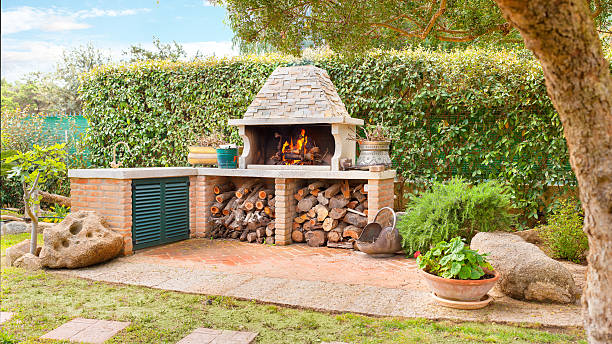
Traditional outdoor fireplace design often features brick or natural stone construction with a raised hearth and defined mantel, echoing classic indoor fireplace styling.
Arched Openings
An arched firebox opening adds a classic, timeless architectural detail that pairs well with traditional home styles.
Decorative Mantels
Adding a substantial mantel piece, sometimes with decorative molding or stonework, enhances the traditional, formal feel of the fireplace.
Warm, Earthy Materials
Natural stone and brick in warm tones complement the classic materials often found in traditional home exteriors.
Natural Stone With Rough Texture
Rustic outdoor fireplace design often features rough-cut or fieldstone materials, embracing natural texture and variation rather than uniform, polished surfaces.
Timber Accents
Incorporating wood beam mantels or timber framing elements enhances the rustic, natural aesthetic.
Asymmetrical or Organic Shapes
Rather than perfectly symmetrical design, rustic fireplace styles often embrace more organic, less rigid shapes that feel handcrafted.
Integrated Wood Storage
A built-in log storage area, often left visually exposed rather than hidden, reinforces the rustic, functional feel of the design.
Mixed Materials
Combining clean architectural lines with natural stone veneer creates a balanced look that bridges modern and traditional styles.
Simplified Traditional Details
Incorporating a mantel or hearth, but with simpler, less ornate detailing than a fully traditional design, suits transitional home styles well.
Built-In Seating
Regardless of home style, incorporating built-in seating around the fireplace enhances both function and integrated design cohesion.
Lighting Integration
Subtle accent lighting built into or around the fireplace extends its visual impact into the evening and can be tailored to match the overall design style.
Complementary Landscaping
Surrounding plantings, whether formal and manicured or natural and informal, should align with the overall design style of the fireplace and home.
The best outdoor fireplace design ideas result in a feature that feels like it was always meant to be part of your property — seamlessly connected to your home's existing style rather than standing apart from it.

Ready to design an outdoor fireplace that matches your home's style? Contact Breaking Ground Outdoor Services to start your custom design consultation.