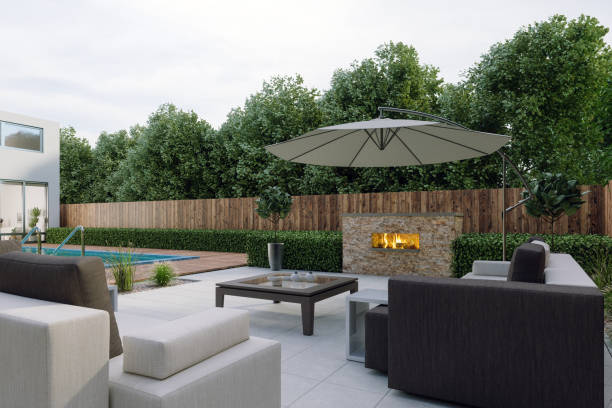
Deciding where to position your outdoor fireplace is one of the most important design decisions in the entire project. Outdoor fireplace placement affects everything from how effectively the space is heated to how it fits within your overall backyard flow. This guide covers the key factors to consider when choosing the right spot.
Unlike a portable fire pit, an outdoor fireplace is a permanent structure, making the placement decision one you'll live with for years to come. Getting outdoor fireplace placement right from the start ensures the feature gets used and enjoyed, rather than becoming an underutilized part of the yard due to poor positioning.
Proximity to Seating Areas
Since fireplaces direct heat outward in one primary direction, positioning the structure so that heat radiates directly toward your main seating area is essential for actually benefiting from the warmth it provides.
Wind Direction
Understanding prevailing wind patterns on your property helps inform placement, since wind can affect how smoke (for wood-burning fireplaces) disperses and how effectively heat reaches seating areas.
Distance From the Home
Outdoor fireplace placement typically requires maintaining appropriate clearance from your home and other structures for safety, which may influence how close to the house the fireplace can realistically be positioned.
Views From Indoor Living Spaces
Positioning the fireplace so it's visible from key indoor living areas — a kitchen window, a living room, a primary bedroom — extends its visual impact and creates a stronger connection between indoor and outdoor living spaces, even when it's not actively in use.
Relationship to Other Outdoor Features
If you have or plan to add an outdoor kitchen, pergola, or patio, outdoor fireplace placement should be considered as part of the overall layout, creating a cohesive flow between different functional zones rather than treating each feature in isolation.
As a Backdrop Feature
Positioning the fireplace along one edge of the patio, with seating arranged facing it, creates a defined focal point similar to how an indoor fireplace anchors a living room.
Adjacent to an Outdoor Kitchen
Placing the fireplace near an outdoor kitchen creates a connected entertaining zone, allowing guests to gather comfortably near both cooking and fire feature areas during gatherings.
Under a Pergola or Patio Cover
With proper ventilation clearance, positioning a fireplace under a covered structure creates a cohesive, protected outdoor living area, though this requires careful attention to safety clearances specific to overhead structures.
As a Standalone Feature in a Separate Zone
For larger properties, some homeowners position the fireplace as its own distinct destination within the yard, separate from the main patio, creating a dedicated fire feature area.
Safety Clearances
Outdoor fireplace placement must account for required clearances from combustible structures, property lines, and overhead elements, which vary based on local codes and the specific fireplace design.
Ventilation for Wood-Burning Fireplaces
Proper placement should account for smoke dispersal patterns, avoiding positioning that would direct smoke toward frequently used seating areas or open windows on the home.
Utility Access
For gas fireplaces, placement needs to account for gas line routing from the home's existing gas supply, which can influence feasible location options.
Existing Landscape Features
Placement should work with existing trees, grading, or other established landscape elements, rather than requiring extensive removal or modification of features you want to preserve.
Thoughtful outdoor fireplace placement ensures your investment becomes a well-used, well-loved feature of your backyard rather than an underutilized structure due to poor positioning. Taking the time to consider heat distribution, safety, and overall flow pays off in years of enjoyment around your new fire feature.

Need help deciding where to place your outdoor fireplace? Contact Breaking Ground Outdoor Services for expert design guidance.