While pavers and concrete are commonly compared for patios, the same decision applies to driveways, where the stakes are arguably even higher given the additional weight and wear driveways experience from vehicle traffic. This guide breaks down the paver driveway vs concrete driveway decision specifically as it relates to this higher-demand application.
Unlike a patio, a driveway experiences regular vehicle weight, more consistent daily use, and often more direct exposure to elements like oil drips or de-icing considerations (though less relevant in Texas's milder winters). These factors make durability and long-term performance especially important in the paver driveway vs concrete driveway decision.
Durability Under Vehicle Weight
When properly installed with adequate base depth and compaction specifically engineered for vehicle loads, paver driveways handle the weight and stress of regular vehicle traffic very well, with the added benefit of some flexibility to accommodate minor ground movement without cracking.
Repairability
This is one of the biggest advantages pavers offer for driveways specifically. If a section develops an issue — from oil staining, a crack, or settling — individual pavers can be lifted and replaced without needing to address the entire driveway surface.
Design Flexibility
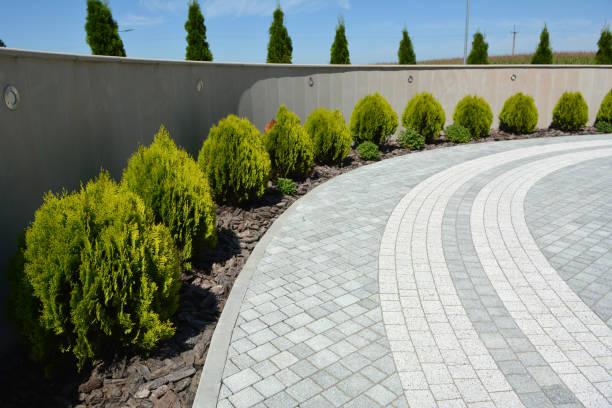
Paver driveways offer significant design flexibility in terms of colors, patterns, and borders, allowing for a more custom, upscale appearance compared to standard poured concrete.
Higher Upfront Cost
Paver driveways typically involve a higher installation cost compared to standard concrete, reflecting the more labor-intensive installation process and, often, higher material costs.
Lower Upfront Cost
Poured concrete generally offers a more budget-friendly entry point for driveway installation compared to pavers.
Simpler Installation Process
A poured concrete driveway is generally a more straightforward installation process compared to the layered base and individual unit installation pavers require.
Cracking Concerns With Soil Movement
This is where concrete driveways face their biggest challenge in Texas conditions. Clay soil's expansion and contraction can cause a rigid concrete slab to crack over time, and once cracked, repairs are often visible and may require addressing the entire slab rather than a small section.
Limited Design Flexibility
While decorative finishing techniques like stamping or staining can enhance a concrete driveway's appearance, it generally offers less design flexibility compared to the wide range of paver patterns and colors available.
Given Texas's expansive clay soil, which causes more ground movement than many other regions, this is a particularly important factor in the paver driveway vs concrete driveway decision. Pavers' ability to flex slightly with ground movement, combined with individual repairability, often gives them a practical advantage for long-term performance and lower lifetime maintenance costs in this specific climate and soil context.
Paver driveways benefit from periodic joint sand refills and occasional resealing, with the advantage of straightforward individual paver replacement if specific sections show wear or damage.
Concrete driveways require less routine maintenance day-to-day but face more complicated repair scenarios if cracking or significant damage occurs, since patching a concrete slab often results in a visible repair that doesn't fully blend with the surrounding surface.
A well-designed paver driveway often creates a stronger curb appeal impression due to its custom pattern and color options, while a well-finished concrete driveway (particularly with decorative treatments like stamping or staining) can still achieve an attractive, polished look at a more accessible price point.
Choose a paver driveway if:
Choose a concrete driveway if:
The paver driveway vs concrete driveway decision ultimately comes down to your priorities around budget, durability, and design flexibility. Understanding how each material performs specifically under vehicle weight and Texas soil conditions helps you make a confident, informed choice for this high-use area of your property.

Considering a new paver or concrete driveway? Contact Breaking Ground Outdoor Services for a professional recommendation and estimate.