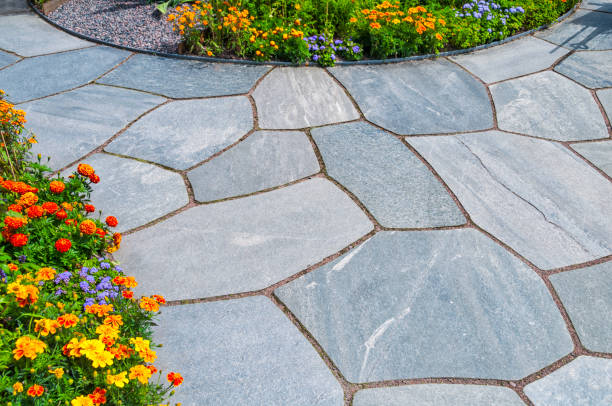
A well-designed walkway does more than connect two points in your yard — it shapes the first impression visitors get as they approach your home. If you're exploring paver walkway ideas, this guide covers design options, layout considerations, and material choices to help you create a path that's both functional and beautiful.
A front walkway is one of the first things guests notice, making it a high-impact opportunity to improve curb appeal without an extensive property-wide renovation. The right paver walkway ideas can transform a plain concrete path or worn stepping stones into a defined, attractive feature that enhances your entire front yard.
Straight, Formal Pathways
A clean, straight paver walkway leading directly from the driveway or street to the front door creates a classic, formal look that suits symmetrical, traditional home styles.
Curved, Natural Pathways
A gently curving walkway adds visual interest and a more relaxed, organic feel, often pairing well with informal garden-style landscaping.
Stepping Stone Style
Using individual, larger paver units spaced with planting or gravel between them creates a casual, garden-path aesthetic that works particularly well for side yard access or secondary pathways.
Wide, Grand Entry Walkways
Increasing the width of a front walkway (beyond the standard narrow path) creates a more substantial, welcoming entrance, especially effective for larger homes.
Contrasting Border Pavers
Using a different color or material for the walkway's border creates definition and a more finished, custom look compared to a single uniform paver field.
Mixed Material Combinations
Combining pavers with gravel, mulch, or planting strips along the edges softens the hardscape and integrates the walkway more naturally into surrounding landscaping.
Pattern Variation
While a simple running bond pattern works well for most walkways, incorporating a herringbone or basketweave pattern adds visual texture and a more custom appearance.
Incorporating low-voltage path lighting along a paver walkway serves both function (safety and visibility) and aesthetics (extending curb appeal into the evening hours), making this one of the most valuable additions to consider during walkway design.
Modern Homes
Simple, clean-lined paver patterns in a monochromatic or minimal color palette complement contemporary architecture without competing visually.
Traditional Homes
Herringbone or basketweave patterns, often in warmer earth-tone colors, pair naturally with classic architectural styles.
Cottage or Garden-Style Homes
Curved pathways with stepping-stone style pavers and softened planting borders suit more informal, garden-focused landscape designs.
Width
Standard walkways are typically wide enough for one person, but wider designs (allowing two people to walk comfortably side by side) create a more inviting, generous feel for a main entry path.
Slip Resistance
Choosing pavers with a textured surface, rather than a smooth, polished finish, improves safety, particularly important for a frequently used entry pathway.
Drainage
Proper base preparation and slight grading ensure water doesn't pool on the walkway surface after rain, which is especially important for safety and long-term paver performance.
The right paver walkway ideas can transform a simple functional pathway into a defining feature of your front yard's curb appeal, creating a welcoming, polished approach to your home that sets the tone before visitors even reach the door.

Ready to upgrade your front walkway? Contact Breaking Ground Outdoor Services to explore paver walkway options for your home.