When planning a premium patio, homeowners often narrow their choice down to two upscale hardscape options: pavers vs natural stone. Both deliver beautiful, durable results, but they differ in cost, installation process, and overall aesthetic. This guide compares the two to help you decide which fits your project best.
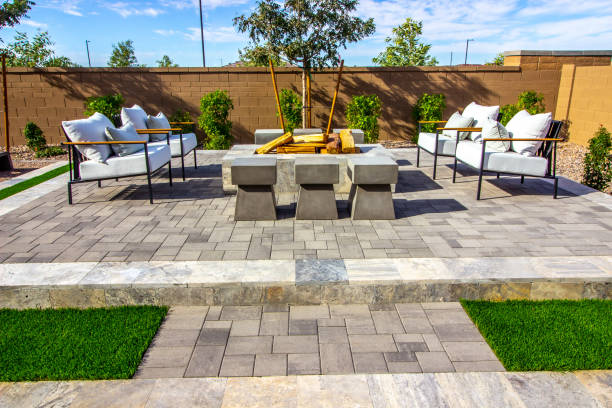
Concrete pavers are manufactured units, produced in consistent shapes, sizes, and colors, offering a wide range of design options through pattern and color combinations.
Natural stone consists of quarried materials like flagstone, travertine, or fieldstone, each piece naturally varying in shape, color, and texture, offering a more organic, one-of-a-kind appearance.
Pavers offer design consistency and a wide range of color and pattern options, allowing for a more uniform, structured appearance if that's the desired aesthetic.
Natural stone offers unmatched natural variation and texture, with each piece slightly different from the next, creating a more organic, high-end look that many homeowners find visually distinctive compared to manufactured pavers.
Generally speaking, concrete pavers offer a more accessible price point compared to natural stone, which typically involves higher material costs due to quarrying, transportation, and the more labor-intensive cutting and fitting process required for irregularly shaped natural stone pieces.
Pavers, with their consistent shapes and sizes, generally install more efficiently, since units fit together in predictable patterns without extensive on-site cutting or fitting.
Natural stone, particularly irregularly shaped varieties like flagstone, often requires more time-intensive installation, as each piece may need individual fitting and cutting to create a cohesive surface, increasing overall labor cost.
Both pavers and natural stone offer excellent durability when properly installed with adequate base preparation. Natural stone is inherently very hard-wearing and resistant to weathering, while quality concrete pavers are engineered specifically for durability and also perform very well over decades of use.
Pavers offer straightforward repairability, since individual units can be lifted and replaced without disturbing the surrounding patio, and replacement pavers are generally easy to source in matching colors and styles.
Natural stone can also be repaired on an individual-piece basis, though finding an exact match for irregular, naturally varied stone can sometimes be more challenging than sourcing a matching manufactured paver.
Pavers offer extensive flexibility through pattern choices (herringbone, basketweave, running bond) and a wide range of manufactured colors designed to complement various home styles.
Natural stone offers flexibility through the natural variation of the material itself, along with choices between different stone types (flagstone, travertine, limestone) each offering distinct textures and color palettes.
Choose pavers if:
Choose natural stone if:
Some homeowners choose to combine both materials in a single project — using natural stone as a feature element (perhaps as a fireplace surround or an accent border) while using more cost-effective pavers for the broader patio surface, achieving a premium look while managing overall project cost.
The pavers vs natural stone decision ultimately comes down to your budget, aesthetic preferences, and priorities around design consistency versus natural variation. Both materials can deliver a beautiful, durable patio — the right choice depends on which qualities matter most for your specific project.

Not sure whether pavers or natural stone is right for your patio? Contact Breaking Ground Outdoor Services for expert guidance and a personalized recommendation.