Installing new sod around existing trees introduces some specific considerations beyond a standard sod installation project. Between root systems, varying shade conditions, and the need to protect established trees during construction, this scenario requires some extra planning to ensure both your new lawn and your existing trees thrive together.
Established trees have root systems that can extend well beyond their canopy, and construction activity involved in sod installation — grading, tilling, equipment traffic — can potentially damage these roots if not approached carefully. At the same time, the shade cast by tree canopies affects which grass varieties will actually thrive in these specific areas, making this a scenario that benefits from thoughtful, tree-aware planning.
Minimizing Grading Changes Near Trees
Significant grading changes close to an established tree can damage or expose roots that were previously at a stable, protected depth. Minimizing grade changes within a tree's root zone helps protect its health during the overall installation process.
Limiting Excavation Depth Near the Trunk
Tilling and soil preparation near tree trunks should generally be more conservative than in open areas, avoiding the more aggressive tilling depth that might be appropriate elsewhere in the yard.
Being Mindful of Equipment Traffic
Heavy equipment repeatedly driving over a tree's root zone can compact soil in ways that affect root health, making it worth planning equipment routes to minimize repeated traffic in these sensitive areas.
Maintaining Appropriate Distance From the Trunk
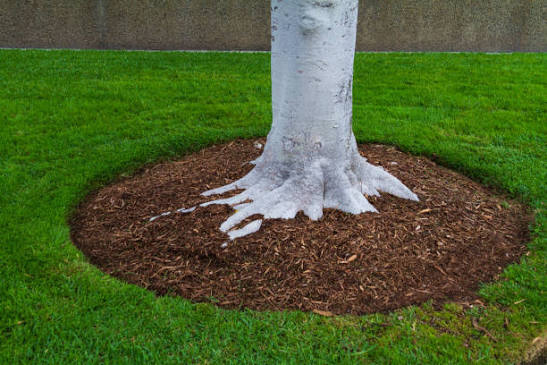
Rather than installing sod directly against the tree trunk, maintaining some distance (often filled with mulch instead) protects the trunk from potential moisture-related issues while also avoiding root disturbance immediately at the base.
Understanding Your Specific Shade Level
Tree canopy density varies significantly, meaning some areas beneath trees receive dappled, partial shade while others may be quite deeply shaded. Understanding your specific conditions helps inform appropriate grass variety selection.
Choosing Shade-Tolerant Grass Varieties
For areas beneath tree canopies, shade-tolerant varieties like St. Augustine generally perform better than full-sun varieties like Bermuda, which often struggle significantly in heavily shaded conditions regardless of other care provided.
Considering Alternatives for Deep Shade
In particularly dense shade where even shade-tolerant grass varieties struggle, alternative ground covers or mulched areas may ultimately provide better long-term results than continuing to fight an uphill battle with grass that simply won't thrive in insufficient light.
Understanding Increased Water Needs
Grass growing near established trees often faces competition from tree roots for available water and nutrients, meaning these areas may require somewhat more attentive watering during establishment compared to open lawn areas without this competition.
Soil Amendment Considerations
Given the nutrient competition from tree roots, soil amendment in these specific areas can help provide adequate resources for new sod to establish despite sharing the space with an established root system.
Creating a Defined Mulch Ring
Rather than installing sod directly to the base of the tree trunk, many landscape professionals recommend a defined mulch ring immediately surrounding the trunk, both protecting the tree and creating a clean transition between the mulched area and surrounding lawn.
Avoiding Mower and String Trimmer Damage
A defined mulch ring also helps protect the tree trunk from potential damage caused by mowing equipment or string trimmers operating close to the base, a common but often overlooked cause of tree trunk injury.
Monitoring as the Tree Matures
As trees continue growing, their canopy density and root system may change over time, meaning grass performance in these areas can shift as well, sometimes requiring reassessment of grass variety or ground cover approach after several years.
Adjusting Irrigation as Needed
Since shade and root competition patterns can change as a tree matures, being willing to adjust your irrigation approach in these specific zones over time helps maintain reasonable grass performance despite evolving conditions.
Thoughtful sod installation around existing trees protects your valuable, established trees while still achieving a reasonably healthy lawn in these specific zones, provided realistic expectations and appropriate grass variety selection are applied to the actual shade and root competition conditions present.

Planning sod installation around existing trees on your property? Contact Breaking Ground Outdoor Services for expert guidance on protecting your trees while achieving a healthy lawn.