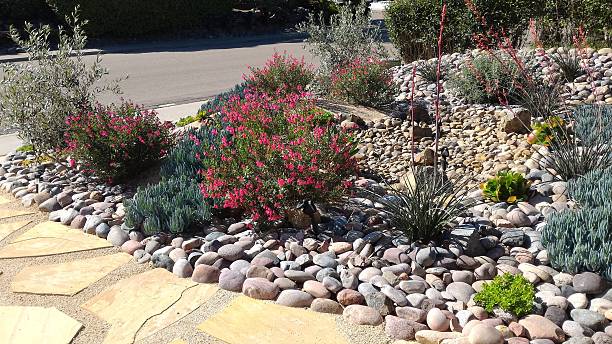
With Texas summers bringing intense heat and periodic water restrictions, xeriscaping has become an increasingly popular approach to landscape design. Far from meaning a yard full of gravel and cactus, modern xeriscaping principles can create a lush, beautiful landscape while significantly reducing water usage. This guide covers the basics of xeriscaping and how to apply these principles to your property.
Xeriscaping is a landscape design approach focused on reducing supplemental water needs through smart plant selection, efficient irrigation, and thoughtful design principles. Rather than eliminating greenery altogether, effective xeriscaping creates an attractive, functional landscape that simply requires significantly less water than a traditional lawn-and-garden approach.
Planning and Design
Effective xeriscaping starts with a thoughtful overall design that considers sun exposure, soil type, and drainage patterns before plant selection even begins.
Soil Improvement
Amending soil to improve water retention and drainage helps plants make the most of available water, reducing the need for frequent supplemental watering.
Efficient Irrigation
Xeriscaping typically incorporates drip irrigation or other targeted watering methods rather than traditional spray systems, delivering water directly to plant roots and minimizing waste from evaporation or overspray.
Practical Turf Areas
Rather than eliminating lawn entirely, xeriscaping often reduces turf to areas where it serves a genuine functional purpose (like a play area), replacing decorative-only lawn space with lower-water alternatives.
Mulching
A generous layer of mulch helps retain soil moisture, regulate soil temperature, and suppress weeds, reducing overall water demand across planting beds.
Appropriate Plant Selection
Choosing drought-tolerant and native plants suited to Texas conditions forms the foundation of a successful xeriscape design, since these plants naturally require less supplemental water once established.
Ongoing Maintenance
Proper long-term maintenance, including appropriate pruning and monitoring, helps ensure the water-wise landscape continues performing efficiently over time.
Incorporating hardscape features like patios, walkways, and gravel beds reduces the overall area requiring irrigation while adding visual interest and functional space to the landscape, making hardscape an important complementary element in xeriscape design.
"Xeriscaping means no plants, just rocks."
In reality, effective xeriscaping incorporates a thoughtful mix of drought-tolerant plants, creating a lush, layered landscape rather than a barren, rock-covered yard.
"Xeriscaping looks the same everywhere."
Xeriscape designs can vary widely in style, from formal and structured to naturalistic and informal, offering as much design flexibility as traditional landscaping approaches.
"Xeriscaping requires no maintenance at all."
While xeriscaping reduces water and general maintenance needs, some ongoing care (pruning, mulch refreshing, occasional weeding) is still part of keeping the landscape looking its best.
Reduced Maintenance Time
Drought-tolerant plants generally require less frequent care than traditional high-water-demand landscaping.
Lower Long-Term Costs
Reduced water bills and lower maintenance requirements can result in meaningful long-term savings compared to a traditional water-intensive landscape.
Resilience During Drought or Watering Restrictions
A xeriscaped landscape holds up significantly better during periods of water restrictions or extended dry spells compared to a traditional lawn-heavy design.
Xeriscaping proves that a water-wise landscape design doesn't mean sacrificing beauty for practicality. With thoughtful plant selection and design principles, a xeriscaped yard can be just as visually striking as a traditional landscape, while using significantly less water and requiring less ongoing maintenance.

Ready to explore a water-wise landscape design for your property? Contact Breaking Ground Outdoor Services to start your xeriscaping consultation.